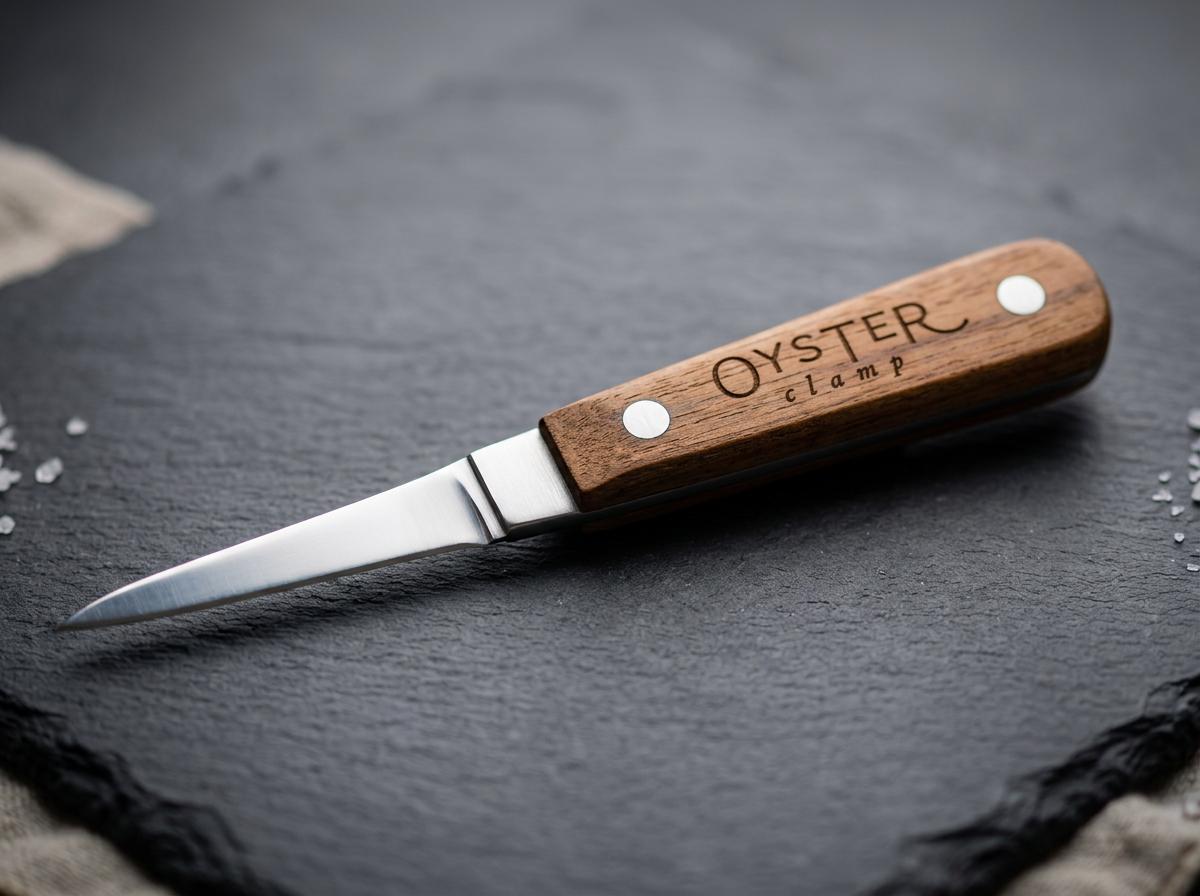
You've probably already had at least one white-knuckle moment shucking oysters — or watched someone else have one. Here's why thousands of home cooks are finally doing it differently.

Every method you've ever been taught has the same fatal flaw: you're pointing a knife directly at your opposite hand.
The towel? It holds the oyster. It doesn't stop a blade. The glove? It protects against scrapes. It doesn't protect against a full stab. "Being careful"? That works until you're tired, cold, or on your third dozen.
We wear helmets on bikes. We use guards on mandolines. But with oysters? We grip a wet, slippery shell and hope the knife doesn't slip.
And when it does, it's not a paper cut — it's a deep puncture covered in raw shellfish bacteria. The kind that costs $90 in Keflex antibiotics if you're lucky, and an ER visit if you're not.
The physics haven't changed in a hundred years. Only now, there's a way to change the setup entirely.

You've probably already tried to solve this yourself. Most people have.
Cut-resistant gloves — better than nothing, but they get soaked, slippery, and still don't stop the knife from driving toward your palm.
Towels — the so-called "classic" method. All a towel does is give you a false sense of security while your hand sits in the danger zone.
YouTube tutorials — every single one teaches you to hold the oyster in your hand and drive the knife toward your palm. The technique varies. The fundamental danger doesn't.
Here's what it comes down to: Gloves only solve grip. A towel only solves stability. Being careful only works until you're tired. None of them change the basic physics.
You don't need a better technique. You need to get your hand out of the way entirely.

None of the old solutions change the setup. The OysterClamp does.
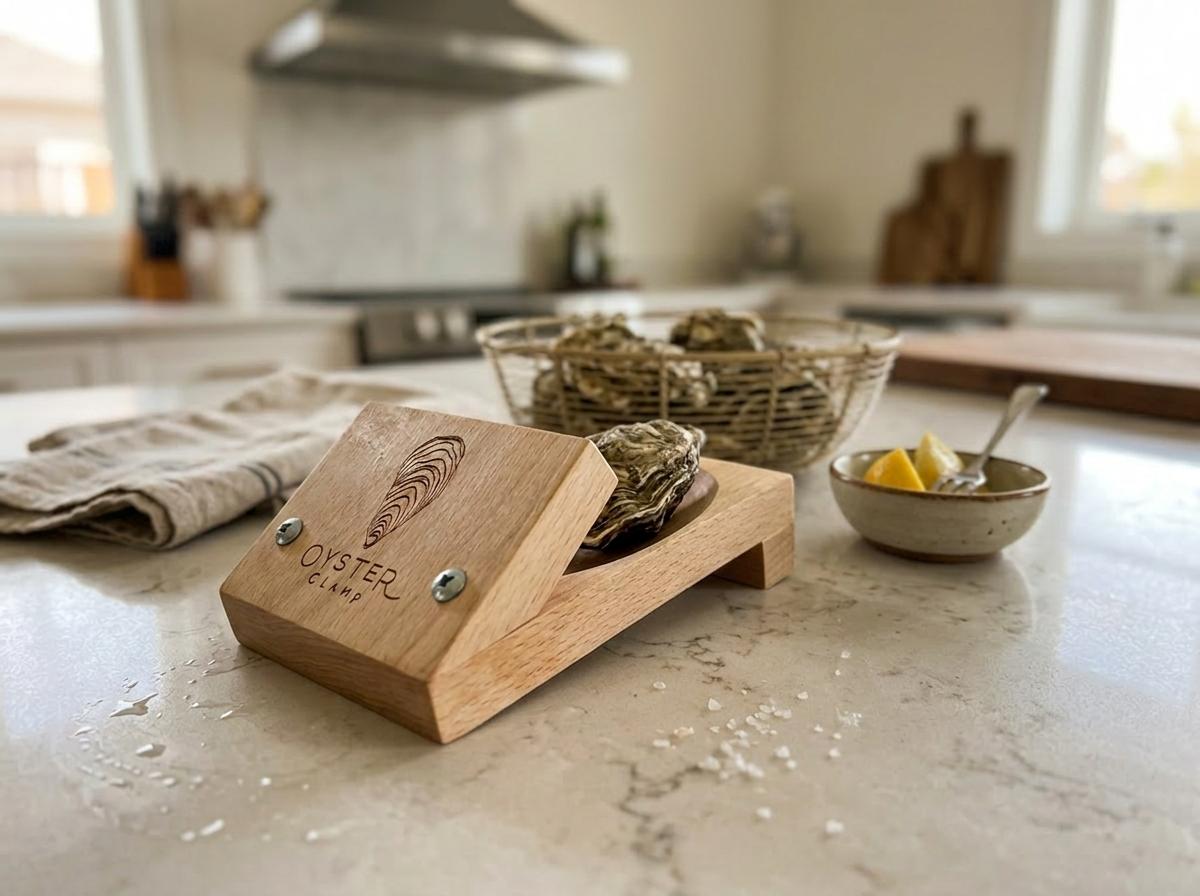
It's a solid French beech wood and stainless steel clamp that locks the oyster to your countertop. Your hand never touches the shell. The knife never points at your palm.
No motor. No batteries. No complicated setup. It hooks onto the edge of your counter — kitchen island, patio table, even a fold-out table at a cookout — and holds the oyster in place while you shuck.
Setup takes thirty seconds. The first oyster takes about ten.
It works on small Kumamotos, fat Wellfleets, stubborn Gulf oysters. It fits most of the average oyster sizes in the world. It grips. It doesn't move.
And unlike those cheap wooden holders that break on the third oyster? This one is built to last. Hundreds of oysters deep, still solid as day one.

This isn't theoretical. Over 18,000 home shuckers use the OysterClamp. Here's what they actually say:
The pattern is the same, over and over: people who avoided oysters — or white-knuckled through them — finally relax. Beginners who were intimidated try it for the first time. Hosts who were afraid of someone getting hurt at their party? They serve oysters now.
One guy who shucked for sixty years by hand said it was the easiest it had ever been.
Here's what nobody tells you about fixing the safety problem: you start buying way more oysters.
When shucking isn't stressful, it stops being an "event" and starts being a Tuesday night. When your hands aren't sore and your nerves aren't shot, you go from a dozen once a month to a couple dozen a week.
And when you host? You actually host oysters — instead of steering guests toward steamed clams because you're afraid someone will bleed on your countertop.
One customer shucked fifty-nine oysters at a Fourth of July party. His brother-in-law — who had never touched a shucking knife — did a dozen after watching for two minutes. Zero injuries. Three guests asked where to buy the clamp before the night was over.
That's the real transformation. It's not just "safer shucking." It's oysters going from something you avoid to something you look forward to.

You've seen the problem. You've tried the alternatives. You've heard from thousands of people who made the switch. The OysterClamp comes with a lifetime guarantee — if it doesn't change the way you shuck, send it back. But fair warning: the usual problem isn't returns. It's the oyster budget.
Get Your OysterClamp — Risk Free →